
What Are The Limitations Of AI Characters?
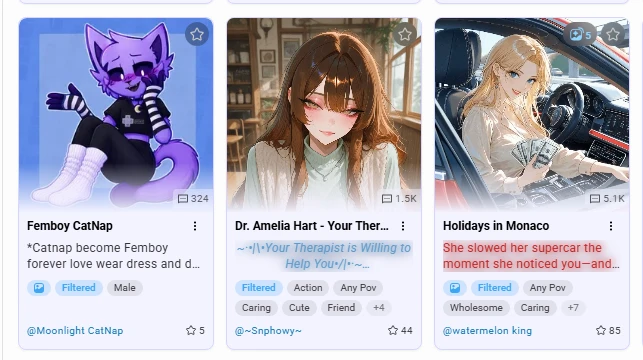
AI characters are advanced software systems that can imitate human personalities, but they still have clear limits. Current AI characters can generate natural conversations, remember user preferences, and respond emotionally, yet they do not have real feelings, personal experiences, or independent understanding. In 2024, surveys of AI companion users showed that more than 60% of users valued emotional interaction, while many still reported concerns about authenticity, privacy, and long-term dependence. The gap between realistic communication and genuine human experience remains one of the biggest limitations.
AI characters have improved rapidly because large language models can process billions of words and learn complex language patterns. However, their ability comes from statistical prediction rather than personal awareness. A character can produce a caring response after analyzing a user's message, but it does not actually experience concern, happiness, or sadness.
“An AI character can recognize emotional signals, but recognition is different from experiencing emotions.”
This difference becomes noticeable in conversations involving grief, relationships, or personal conflicts. A human friend responds based on shared memories and personal understanding, while an AI character selects responses based on learned language patterns. A 2023 study with more than 1,000 participants found that people often rated AI responses as polite and supportive, but many participants still described human conversations as more meaningful because humans provide personal experiences.
The absence of genuine emotions also affects long-term relationships with AI characters. Users may feel connected because the system remembers previous conversations and maintains a consistent communication style. However, the relationship is created through programming and data processing rather than mutual emotional connection.
This limitation leads to another issue: personality consistency. AI characters are usually designed with specific traits, such as being humorous, supportive, confident, or mysterious. Maintaining these traits across thousands of conversations is difficult because language models generate responses based on immediate context.
A character that behaves patiently in one conversation may provide a completely different style of answer later. Research published between 2022 and 2024 showed that large language models could produce different outputs when users changed only small parts of their prompts. For AI characters used in games, virtual communities, or companionship platforms, inconsistent personalities can reduce user trust.
The problem becomes more complex when AI characters serve millions of users. Traditional fictional characters have fixed scripts written by authors, but AI characters generate unlimited conversations. Developers must consider a large number of possible user questions, emotional situations, and social contexts.
| Area | Current ability | Remaining limitation |
|---|---|---|
| Conversation | Produces natural dialogue | Cannot fully understand personal meaning |
| Memory | Can remember user information | Memory may be incomplete or incorrectly applied |
| Personality | Can imitate character traits | Personality stability is difficult |
| Emotion | Detects emotional language | Does not experience feelings |
Personality limitations are connected with another challenge: creativity. AI characters can create stories, jokes, role-playing scenarios, and conversations, but their creativity mainly depends on existing information from training data.
Human creators often develop ideas from personal experiences, cultural background, emotions, and unexpected observations. AI systems combine patterns from previous information. A 2023 evaluation of AI-generated writing showed that users often considered AI content impressive, but professional reviewers still identified differences in originality and deeper interpretation.
AI characters are strong at generating possibilities, but weaker at creating meaning from personal experience.
This difference affects entertainment products. An AI game character can create thousands of unique conversations, but it may struggle to develop a truly original personality arc similar to characters written by experienced authors. The character may sound interesting without having a deeper internal motivation.
Another limitation appears in sensitive conversations. Many AI character platforms now include romantic or adult interaction features, including services such as sex ai chat. These systems can simulate intimacy through language generation, but the interaction remains artificial because the AI does not experience attraction, desire, or emotional attachment.
Privacy concerns become more important as conversations become more personal. AI characters often collect conversation data to improve responses, personalize experiences, or maintain memory functions. A 2024 consumer survey found that around 60% of digital assistant users worried about how companies store and process personal conversations.
Users may share private information with AI characters because the interaction feels personal and judgment-free. Conversations may include details about relationships, emotional states, preferences, or personal situations. If companies do not apply strong security standards, stored conversation data could create privacy risks.
The increasing realism of AI characters also raises concerns about user dependence. AI companions are available 24 hours a day, respond immediately, and adapt to individual preferences. These features can make interactions attractive, especially for people who want frequent conversations without social pressure.
However, AI relationships cannot fully replace human relationships. A 2024 research review on human-AI interaction reported that users often developed emotional attachment to AI systems, but researchers emphasized that AI lacks mutual responsibility, physical presence, and shared life experiences.
“AI companionship can provide interaction, but it cannot reproduce the full structure of human relationships.”
Accuracy is another limitation. AI characters may provide incorrect information while producing responses that appear confident. This happens because language models generate likely answers rather than independently verifying every statement.
For entertainment use, small mistakes may not create serious problems. However, AI characters used in education, healthcare support, or professional services require stronger accuracy controls. A 2024 analysis of large language models showed that incorrect information generation remained a measurable issue even in advanced systems.
Cultural understanding also remains incomplete. AI characters are trained on information from different societies, languages, and communities, but they may misunderstand social habits, humor, or communication styles.
A phrase that feels friendly in one culture may appear inappropriate in another. Human communication depends on background knowledge, relationships, and social experience. AI characters can learn patterns from data but may fail to understand why certain expressions carry different meanings.
Technical limitations also affect accessibility. Developing advanced AI characters requires expensive computing resources, large datasets, and continuous system maintenance. In 2024, leading AI companies invested billions of dollars in computing infrastructure to train and operate large models.
Smaller developers may not have similar resources, which limits their ability to create highly advanced AI characters. The cost of maintaining real-time conversations, voice generation, memory systems, and safety controls remains high.
AI characters will continue improving through better language models, multimodal systems, and memory technologies. Future systems may become more consistent, more personalized, and better at understanding context. However, technological improvement does not remove the fundamental difference between imitation and experience.
AI characters can create realistic conversations, but they still operate through algorithms rather than personal awareness, emotions, or independent intentions. Their future development depends not only on making responses more natural but also on understanding where simulation ends and human experience begins.
Spec'ing a masonry package?
Send drawings, schedule, and scope. We'll return a hard-number bid within 10 business days — no day-labor, no markup layers.
Request a Project Bid